
Infrared heating: Advantages & disadvantages, costs and tips
Infrared heaters are a versatile and modern heating solution that impresses with its flexibility and energy efficiency. This guide explains everything you need to know about how they work and their various applications.
We also explore the advantages and disadvantages of this innovative heating technology, take a look at current costs, and provide valuable tips on optimal placement so you can get the most out of your infrared heater.

What is an infrared heater?
An infrared heater is electrically powered and characterised by its slim, modern design, making it easy to mount on walls or ceilings. Its straightforward installation and removal make it a practical and highly flexible heating solution.
It can be used for many different purposes:
- as the main heating system for an entire apartment,
- as supplementary heating during transitional seasons,
- in the bathroom,
- for caravans and mobile homes,
- in conservatories,
- and many more applications.
The video below explains why infrared heaters are so popular:
Advantages and disadvantages of infrared heating
If you are considering purchasing an infrared panel and want to make an informed decision, it is important to understand both the advantages and disadvantages of infrared heating. Below, we have summarised the most important points for you.
Advantages
- ✅ low acquisition and operating costs
- ✅ minimal space requirements
- ✅ pleasant and healthy indoor climate
- ✅ high energy efficiency
- ✅ long service life
- ✅ no maintenance required
- ✅ simple and quick installation
Disadvantages
- ❌ no hot water preparation
- ❌ only conditionally suitable as a primary heating system
- ❌ performance depends on electricity prices
Suitable for allergy sufferers: Infrared heaters do not stir up dust because, unlike conventional radiators, they do not create air movement. This leads to a noticeably more pleasant indoor climate, making infrared heating particularly suitable for people with allergies or asthma.
Find the right infrared heater!
How would you like to use the infrared heater?
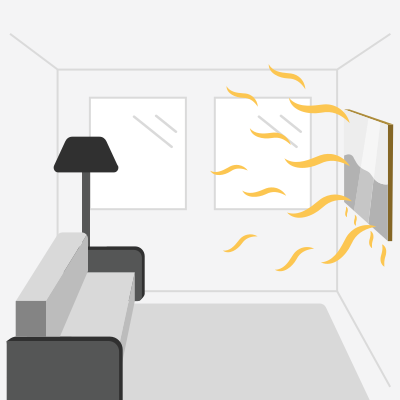
Picture or Mirror heating
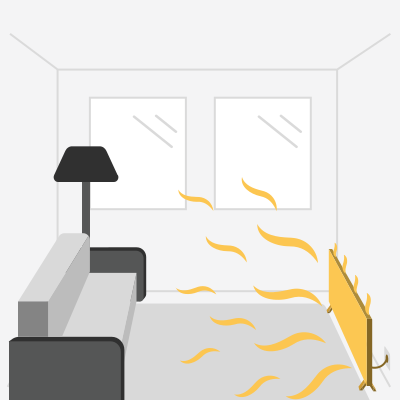
Additional Heating
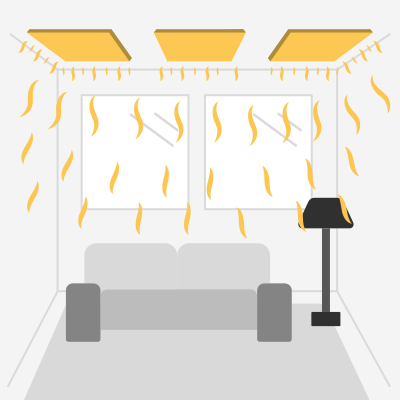
Full Heating
Related products
Check out these items from our shop:
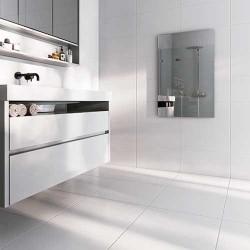

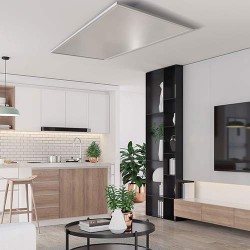
How does an infrared heater work?
Infrared heaters work fundamentally differently than conventional heating systems. While classic heaters directly heat the air in a room, infrared heaters generate infrared radiation that is absorbed by objects in the room. Furniture, walls, floors, and even people absorb and store this heat radiation.
These objects then release the heat evenly back into the room, creating a pleasant, constant, and long-lasting warmth similar to natural sunlight. This ensures even heat distribution without cold spots and helps maintain a comfortable indoor climate without drying out the air.
The image below illustrates how infrared heating works compared to conventional convection heating methods.
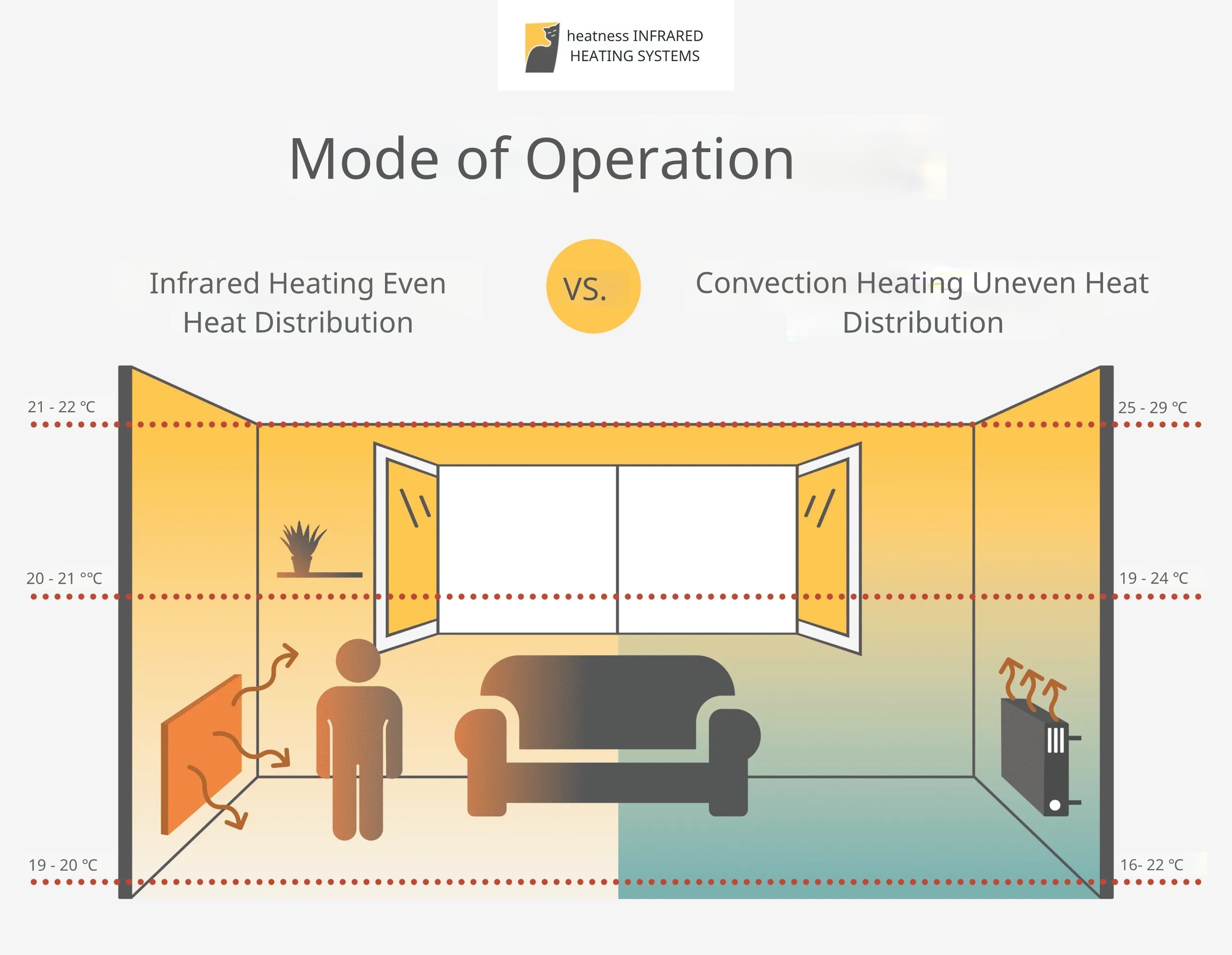
Infrared heaters are particularly efficient and create a pleasant room atmosphere.
What should you pay attention to when choosing infrared heaters?
Before choosing an infrared heater, there are some important points to consider. These relate to both the quality of the heater and its efficient use. The following information will help you determine whether an infrared heater is the right solution for your needs.
Infrared heating as primary or supplementary heating
Infrared heaters offer exceptional flexibility and can be used both as a primary heating system and as supplementary heating to support existing systems. The main advantages of using infrared panels as a primary heating system include:
- Very easy retrofitting
- No costly removal of existing heating systems
- Easy expansion if additional heating capacity is required
- Rapid heat-up during sudden cold periods
Infrared heaters are also an excellent supplementary heating solution. They can be repositioned easily and provide targeted warmth exactly where it is needed, especially in transitional seasons or in rooms that are only used occasionally.
Infrared panels for new and old buildings
New buildings are typically well insulated and therefore ideal for infrared heating. Due to the reduced heating demand, infrared systems can be used very efficiently as the primary heating source in modern constructions.
Infrared heating is also suitable for older buildings, provided that adequate insulation is in place. If too much cold air enters the building, heating performance may be reduced. In such cases, insulation improvements are recommended to maximize efficiency.
In older properties, infrared heaters are often an excellent supplementary solution for selectively heating individual rooms. They offer a flexible and cost-effective way to generate local warmth and require nothing more than a standard power outlet.
Sustainability: According to Section 71d of the German Building Energy Act (GEG), infrared heating systems are recognised as a sustainable heating option, provided certain structural requirements are met.
What makes a good infrared heater?
A high-quality infrared heater should meet several key criteria to ensure long-term efficiency and durability:
- IP65 protection class: Dustproof and protected against water jets
- High-quality materials: Glass, aluminium or ceramic
- Energy efficiency: Almost 100% energy conversion
- Easy installation: Wall, ceiling or freestanding use
- Design variety: Decorative mirror and picture heaters
How quickly does an infrared heater heat up?
An infrared wall heater provides pleasant warmth within 5 to 20 minutes. Since the heat is radiated directly onto the body, it is perceived almost immediately, even before the overall room temperature rises noticeably.
Choose the right model – size, heat requirements & designs
Proper planning before purchasing an infrared heater is essential. The heater size must be matched to the room to be heated, taking into account insulation quality, room dimensions, and surface area. Once the technical requirements are defined, you can choose from a wide range of materials, colours, and design options to suit your interior.
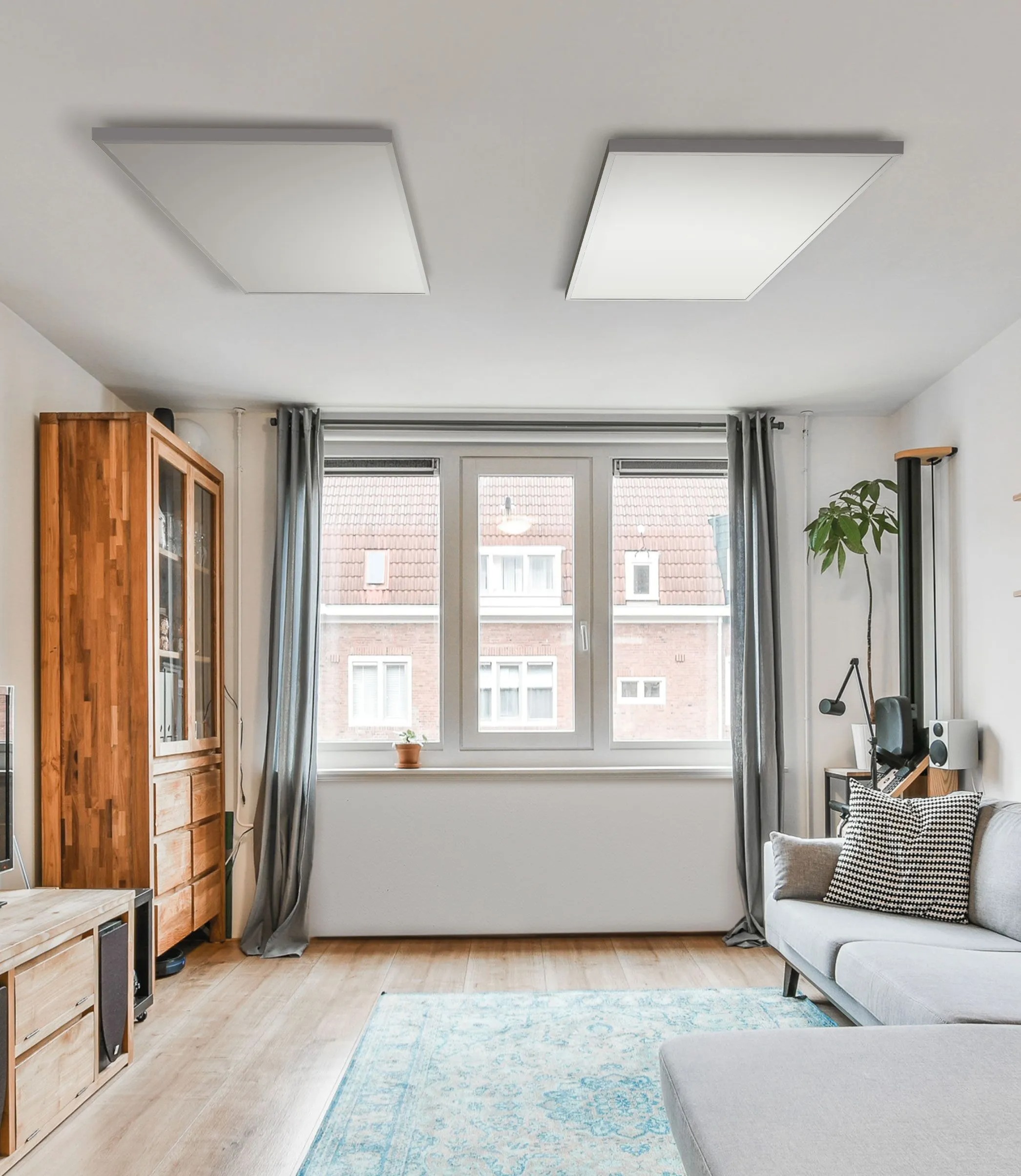
Correct sizing and positioning are key factors for efficient infrared ceiling heating.
Size of the infrared heater
The following table provides information on which infrared heater is suitable for which room size: view detailed overview
| Heater size | Room size* | Dimensions | Power |
|---|---|---|---|
 |
15 m² | 60 × 120 cm | 600 W |
 |
10 m² | 60 × 90 cm | 450 W |
 |
7 m² | 60 × 60 cm | 300 W |
 |
5 m² | 30 × 120 cm | 400 W |
 |
4 m² | 30 × 90 cm | 300 W |
*Based on a well-insulated room with a ceiling height of 2.5 m.
Stylish warmth: Design options for your infrared heater
Infrared panels are available in a wide range of designs and materials. Popular options include aluminium, glass, and ceramic, each offering specific functional and aesthetic advantages.
- Ceramic – highest quality and excellent thermal conductivity
- Aluminium – lightweight and highly versatile
- Glass – modern look with maximum design flexibility
In addition to material choices, infrared heaters are also available as mirrors or with custom image designs. Mirror heaters are especially popular in bathrooms and hallways, while image heaters blend seamlessly into living spaces.
Costs for an infrared heater
Contrary to popular belief, infrared heating is very efficient, including in terms of cost . Ultimately, however, the cost of infrared heating depends on several factors:
- Electricity costs
- Performance of the heating panels
- Building insulation and number of exterior walls
- Quality of the infrared panel
- Room size and ceiling height
The following examples should give you an idea of the costs that can be incurred when using an infrared heater:
Acquisition costs
Prices for infrared panels vary depending on size and power output. A suitable panel for a room of approximately 15 m² (with a ceiling height of 2.5 m and good insulation) costs around €300–400. The smallest units, however, start at just €129.
Operating costs
Operating costs depend on the panel’s output, the electricity price, and overall electricity consumption . In general, they are lower than conventional heating systems, as infrared heaters require no maintenance and are particularly energy-efficient.